
|
|
P.Mean >>
Category >> Placebo controlled trials (created 2007-06-26).
|
A placebo is an inert substance that looks and tastes like an active drug, which is used in research studies to provide a blinded comparison group for the active drug. In a study of a medical device or a physical intervention, the placebo takes a different form. Placebo controlled trials raise difficult ethical and logistical concerns. Also see Category: Blinding in research, Category: Equipoise in research, Category: Ethics in research.
2011
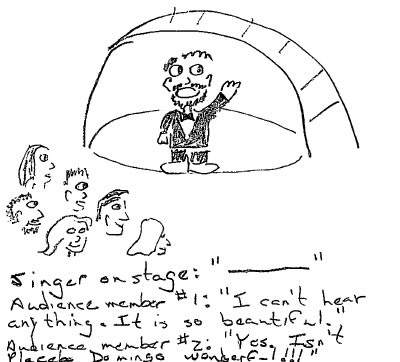
P.Mean: Cartoon about placebos (created 2011-06-14). I drew a small cartoon about placebos. I know you think that this is drawn by a professional artist, but I did this. Really!
SJ Senn. Are placebo run ins justified? BMJ 1997: 314(7088); 1191-3. [Medline] [Full text]. Description: This article criticizes the use of placebos at the start of a study to estimate compliance patterns and to potentially exclude patients who do not comply well with the research protocol. The author argues that this practice is deceptive and leads to poor science.
T. J. Kaptchuk, J. M. Kelley, L. A. Conboy, R. B. Davis, C. E. Kerr, E. E. Jacobson, I. Kirsch, R. N. Schyner, B. H. Nam, L. T. Nguyen, M. Park, A. L. Rivers, C. McManus, E. Kokkotou, D. A. Drossman, P. Goldman, A. J. Lembo. Components of placebo effect: randomised controlled trial in patients with irritable bowel syndrome. Bmj 2008: 336(7651); 999-1003. [Medline] [Abstract] [Full text] [PDF]. Description: The authors suggest that the placebo affect can be separated into three components: the process of observation itself (the Hawthorne effect), the therapeutic ritual associated with a placebo, and the patient-practitioner interactions. They then test this empirically in a three arm single blind study. There were significant differences between the arms of the study, and the effect of the patient-practitioner interactions was the strongest effect.
Steve Draper. The Hawthorne effect: a note. This website was last verified on 2008-01-14. URL: www.psy.gla.ac.uk/~steve/hawth.htmlEdzard Ernst. Homeopathy, non-specific effects and good medicine. Rheumatology. Excerpt: "In this issue, Brien et al. [1] report the findings of a five-armed randomized controlled trial, which was aimed at differentiating between the effects of homeopathic remedies and patient consultations. The authors demonstrate that homeopathic remedies are placebos and show that ‘the benefits of homeopathy are attributable to the consultation’ [1]. Critics of homeopathy have always pointed out that homeopathic remedies are so highly dilute that they must be devoid of specific therapeutic effects. They are biologically implausible [2], and the ∼150 published trials collectively fail to indicate clinical effectiveness [3]. At the same time, we know from several observational studies (e.g. [4]) that patients do improve after consulting a homeopath. " [Accessed December 20, 2010]. Available at: http://rheumatology.oxfordjournals.org/content/early/2010/11/08/rheumatology.keq265.short.
Hróbjartsson A, Gøtzsche PC. Is the placebo powerless? An analysis of clinical trials comparing placebo with no treatment. N Engl J Med 2001, 344:1594-1602. Available at http://www.nejm.org/doi/full/10.1056/NEJM200105243442106
Lund I, Naslund J, Lundeberg T. Minimal acupuncture is not a valid placebo control in randomised controlled trials of acupuncture: a physiologist's perspective. Chinese Medicine. 2009;4(1):1. Available at: http://www.cmjournal.org/content/4/1/1 [Accessed February 10, 2009].
John E. Dodes. The Mysterious Placebo. Description: Published in the January/February 1997 issue of Skeptical Inquirer. A nice overview of the placebo effect and how it influences the study of alternative medicines. This website was last verified on 2008-01-14. URL: www.csicop.org/si/9701/placebo.html
Journal article: Paul Enck, Sibylle Klosterhalfen, Stephan Zipfel. Novel study designs to investigate the placebo response BMC Medical Research Methodology. 2011;11(1):90. Abstract: "BACKGROUND: Investigating the size and mechanisms of the placebo response in clinical trials have relied on experimental procedures that simulate the double-blind randomized placebo-controlled design. However, as the conventional design is thought to elucidate drug rather than placebo actions, different methodological procedures are needed for the placebo response. Methods: We reviewed the respective literature for trials designs that may be used to elucidate the size of the placebo response and the mechanisms associated with it. Results: In general, this can be done by either manipulation the information provided to the subjects, or by manipulation the timing of the drug applied. Two examples of each strategy are discussed: the "balanced placebo design" (BDP) and the "balanced cross-over design" (BCD) and their variants are based on false information, while the "hidden treatment" (HT) and the ""delayed response test" (DRT) are based on manipulating the time of drug action. Since most such approaches include deception or incomplete information of the subjects they are suitable for patient only with authorized deception. Conclusion: Both manipulating the information provided to subjects (BDP, DCD) or manipulating the timing of drug application (HT, DRT) allows overcoming some of the restrictions of conventional drug trials in the assessment of the placebo response, but they are feasible mostly in healthy subjects for ethical reasons." [Accessed on June 14, 2011]. http://www.biomedcentral.com/1471-2288/11/90
Journal article: Marta Peciña, Hamdan Azhar, Tiffany M. Love, Tingting Lu, Barbara L. Fredrickson, Christian S. Stohler, Jon-Kar Zubieta. Personality Trait Predictors of Placebo Analgesia and Neurobiological Correlates Neuropsychopharmacology. 2012. Personality traits have been shown to interact with environmental cues to modulate biological responses including treatment responses, and potentially having a role in the formation of placebo effects. Here, we assessed psychological traits in 50 healthy controls as to their capacity to predict placebo analgesic effects, placebo-induced activation of μ-opioid neurotransmission and changes in cortisol plasma levels during a sustained experimental pain challenge (hypertonic saline infused in the masseter muscle) with and without placebo administration. Statistical analyses showed that an aggregate of scores from Ego-Resiliency, NEO Altruism, NEO Straightforwardness (positive predictors) and NEO Angry Hostility (negative predictor) scales accounted for 25% of the variance in placebo analgesic responses. Molecular imaging showed that subjects scoring above the median in a composite of those trait measures also presented greater placebo-induced activation of μ-opioid neurotransmission in the subgenual and dorsal anterior cingulate cortex (ACC), orbitofrontal cortex, insula, nucleus accumbens, amygdala and periaqueductal gray (PAG). Endogenous opioid release in the dorsal ACC and PAG was positively correlated with placebo-induced reductions in pain ratings. Significant reductions in cortisol levels were observed during placebo administration and were positively correlated with decreases in pain ratings, μ-opioid system activation in the dorsal ACC and PAG, and as a trend, negatively with NEO Angry Hostility scores. Our results show that personality traits explain a substantial proportion of the variance in placebo analgesic responses and are further associated with activations in endogenous opioid neurotransmission, and as a trend cortisol plasma levels. This initial data, if replicated in larger sample, suggest that simple trait measures easily deployable in the field could be utilized to reduce variability in clinical trials, but may also point to measures of individual resiliency in the face of aversive stimuli such as persistent pain and potentially other stressors. [Accessed on November 21, 2012]. http://www.nature.com/npp/journal/vaop/naam/abs/npp2012227a.html.
Robert Todd Carroll. The Placebo Effect. Excerpt: The placebo effect is the measurable, observable, or felt improvement in health not attributable to treatment. This effect is believed by many people to be due to the placebo itself in some mysterious way. A placebo (Latin for �I shall please�) is a medication or treatment believed by the administrator of the treatment to be inert or innocuous. Placebos may be sugar pills or starch pills. Even �fake� surgery and �fake� psychotherapy are considered placebos. This website was last verified on 2008-01-14. URL: www.skepdic.com/placebo.html
Zelda Di Blasi, Fay Crawford, Colin Bradley, Jos Kleijnen. Reactions to treatment debriefing among the participants of a placebo controlled trial. BMC Health Services Research. 2005;5(1):30. Abstract: "BACKGROUND: A significant proportion of trial participants respond to placebos for a variety of conditions. Despite the common conduct of these trials and the strong emphasis placed on informed consent, very little is known about informing participants about their individual treatment allocation at trial closure. This study aims to address this gap in the literature by exploring treatment beliefs and reactions to feedback about treatment allocation in the participants of a placebo-controlled randomized clinical trial (RCT). METHODS: Survey of trial participants using a semi-structured questionnaire including close and open-ended questions administered as telephone interviews and postal questionnaires. Trial participants were enrolled in a double-blind placebo-controlled RCT evaluating the effectiveness of corticosteroid for heel pain (ISRCTN36539116). The trial had closed and participants remained blind to treatment allocation. We assessed treatment expectations, the percentage of participants who wanted to be informed about their treatment allocation, their ability to guess and reactions to debriefing. RESULTS: Forty-six (73%) contactable participants responded to our survey. Forty-two were eligible (four participants with bilateral disease were excluded as they had received both treatments). Most (79%) participants did not have any expectations prior to receiving treatment, but many 'hoped' that something would help. Reasons for not having high expectations included the experimental nature of their care and possibility that they may get a placebo. Participants were hopeful because their pain was so severe and because they trusted the staff and services. Most (83%) wanted to be informed about their treatment allocation and study results. Over half (55%) said they could not guess which treatment they had been randomized to, and many of those who attempted a guess were incorrect. Reactions to treatment debriefing were generally positive, including in placebo responders. CONCLUSION: Our study suggests that most trial participants want to be informed about their treatment allocation and trial results. Further research is required to develop measure of hope and expectancy and to rigorously evaluate the effects of debriefing prospectively." [Accessed February 3, 2010]. Available at: http://www.biomedcentral.com/1472-6963/5/30.
Krogsboll L, Hrobjartsson A, Gotzsche P. Spontaneous improvement in randomised clinical trials: meta-analysis of three-armed trials comparing no treatment, placebo and active intervention. BMC Medical Research Methodology. 2009;9(1):1. Available at: http://www.biomedcentral.com/1471-2288/9/1 [Accessed February 23, 2009].
TheProfessorFunk. The Strange Powers of the Placebo Effect.; 2011. Abstract: "A look at the many strange effects of placebos. Created by: Daniel Keogh - http://www.twitter.com/ProfessorFunk, Luke Harris - http://www.lukeharrisgraphics.com. Sources: Ben Goldacre's book 'Bad Science' has an excellent chapter on placebos http://www.badscience.net/, http://www.amazon.co.uk/Bad-Science-Ben-Goldacre/dp/000728487X/?tag=bs0b-21. The Wikipedia page on Placebos is pretty excellent too: http://en.wikipedia.org/wiki/Placebo." [Accessed March 3, 2011]. Available at: http://www.youtube.com/watch?v=yfRVCaA5o18.
Beatrice A. Golomb, Laura C. Erickson, Sabrina Koperski, et al. What's in Placebos: Who Knows? Analysis of Randomized, Controlled Trials. Annals of Internal Medicine. 2010;153(8):532 -535. Abstract: "Background: No regulations govern placebo composition. The composition of placebos can influence trial outcomes and merits reporting. Purpose: To assess how often investigators specify the composition of placebos in randomized, placebo-controlled trials. Data Sources: 4 English-language general and internal medicine journals with high impact factors. Study Selection: 3 reviewers screened titles and abstracts of the journals to identify randomized, placebo-controlled trials published from January 2008 to December 2009. Data Extraction: Reviewers independently abstracted data from the introduction and methods sections of identified articles, recording treatment type (pill, injection, or other) and whether placebo composition was stated. Discrepancies were resolved by consensus. Data Synthesis: Most studies did not disclose the composition of the study placebo. Disclosure was less common for pills than for injections and other treatments (8.2% vs. 26.7%; P = 0.002). Limitation: Journals with high impact factors may not be representative. Conclusion: Placebos were seldom described in randomized, controlled trials of pills or capsules. Because the nature of the placebo can influence trial outcomes, placebo formulation should be disclosed in reports of placebo-controlled trials. Primary Funding Source: University of California Foundation Fund 3929�Medical Reasoning." [Accessed October 19, 2010]. Available at: http://www.annals.org/content/153/8/532.abstract.
 All of the material above this paragraph is licensed under a
Creative Commons Attribution 3.0 United States License. This page was written by
Steve Simon and was last modified on
2017-06-15. The material
below this paragraph links to my
old website, StATS. Although I wrote all of the material
listed below, my ex-employer, Children's Mercy Hospital, has claimed copyright
ownership of this material. The brief excerpts shown here are included under
the fair use provisions of U.S. Copyright laws.
All of the material above this paragraph is licensed under a
Creative Commons Attribution 3.0 United States License. This page was written by
Steve Simon and was last modified on
2017-06-15. The material
below this paragraph links to my
old website, StATS. Although I wrote all of the material
listed below, my ex-employer, Children's Mercy Hospital, has claimed copyright
ownership of this material. The brief excerpts shown here are included under
the fair use provisions of U.S. Copyright laws.
2007
8. Stats: The stubborn insistence on placebos (June 29, 2007). The patients who volunteer for a randomized trial are sacrificing a great deal of autonomy. They giving up the right to determine which drug they get and they are ceding this authority not to an expert but to a random device. You should not abuse that gift by asking them to participate in a trial where they have a 50% chance of getting a treatment that is known to be inferior. This is especially difficult when one of the choices is a placebo. There is a hot debate about when a placebo arm is ethically acceptable.
7. Stats: The trouble with apples and oranges (June 25, 2007). I am still working on the details of a presentation for the Kansas City University of Medicine and Biosciences. They want me to talk at lunch during the 2007 Homecoming CME and Reunion weekend. The new title is "Medical Journals - The Trouble with Apples and Oranges."
6. Stats: When bad control groups happen to good researchers (June 15, 2007). The Kansas City University of Medicine and Biosciences wants me to give a light humorous talk at lunch during the 2007 Homecoming CME and Reunion weekend. Somehow, they provided me with a title for my talk, "Humor, Databases and Grant Proposals: What Strange Bedfellows" which is a fine title, but not the one I would have chosen. I'll talk it over with the organizers, but here's a possible choice: "When bad control groups happen to good researchers".
2006
5. Stats: The tension between scientific validity and ethical concerns (November 17, 2006). A question on the IRB Forum email discussion group (from RI) centered on the ethical concerns about using a placebo arm in a study involving control of pain. There are scientific reasons why a placebo control group are important, but is it ethical to ask research subjects to possibly endure some greater level of pain in order to achieve certain scientific goals?
4. Stats: Ethical concerns about a placebo run-in (created 2006-10-04). Dear Professor Mean, Some of the trials that our Institutional Review Board looks at have a placebo run-in period. All patients are given a placebo before the start of treatment and anyone who responds well to the placebo is dropped from the trial. What are the ethical ramifications of such a study. You can't disclose the placebo run-in period to the research volunteers because it would defeat the purpose. Updated 2010-02-04.
2005
3. Stats: Patients' reactions to finding out they were in the placebo group (May 11, 2005). A lot of people have written a lot of things about the use of placebos in research, but one group that hasn't been heard from nearly enough is the patients themselves. A recently published article has changed that trend.
2004
2. Stats: Excluding placebo responders (June 25, 2004). I've always been fascinated by the placebo effect and the ethical issues associated with use of placebos in research. A correspondent in the IRBForum email discussion group asked about the recent efforts of drug companies to identify patients who are likely to show a placebo effect and then exclude them from randomized trials.
2001
1. Stats: Ethics of a placebo group (August 2, 2001). Dear Professor Mean, Some of my colleagues want to use placebos in their research, but I have warned them about the ethical issues surrounding the use of a placebo group. When (if ever) is it ethical to use a placebo group? --Kibitzing Kathy
What now?
Browse other categories at this site